Fishing Safaris in Uganda: While Uganda is world-famous for its mountain gorillas, savannah landscapes, and thrilling cultural experience, it is also home to some of the most thrilling freshwater spot fishing on the planet. With roughly 25% of the country covered by water, Uganda provides an incredible variety of angling environments from the massive expanse of Lake Victoria to the turbulent, oxygen-rich waters at the base of Murchison Falls. For the dedicated angler, the “Pearl of Africa” represents a frontier of freshwater giants, where the ancient Nile River serves as a backdrop for some of the most intense battles between man and fish. In this guide, we explore the deep-water secrets of the Nile Perch, the aggressive strikes of the Tiger Fish, and the logistical intricacies of planning a world-class fishing expedition in 2026.
Why is Uganda the premier freshwater fishing destination in Africa?
The biological richness of Uganda’s waterways is a result of its unique geography. Situated in the African Great Lakes region, the country sits atop the Nile Basin, acting as a massive reservoir that feeds the world’s longest river. This abundance of water creates a series of interconnected ecosystems that have evolved over millions of years. Unlike the ocean, where salt and tides dictate the rhythm of life, Uganda’s freshwater systems are driven by oxygen levels, seasonal rains, and the sheer volume of the Nile’s flow.
The primary draw for international anglers is the Nile Perch (Lates niloticus). This apex predator was introduced to Lake Victoria and the Victoria Nile in the 1950s, and while its ecological impact was controversial, it has created a world-class spot fishery. These fish grow to sizes that seem mythical, with some individuals exceeding 200 kilograms. Beyond the Perch, the diversity of species from the prehistoric Lungfish to the razor-toothed Tiger Fish—ensures that every cast holds the potential for something extraordinary. In 2026, the combination of professional charter services and the preservation of “catch and release” zones has solidified Uganda as the “Gold Standard” for African freshwater angling.
What are the “Big Three” species every angler targets in Uganda?
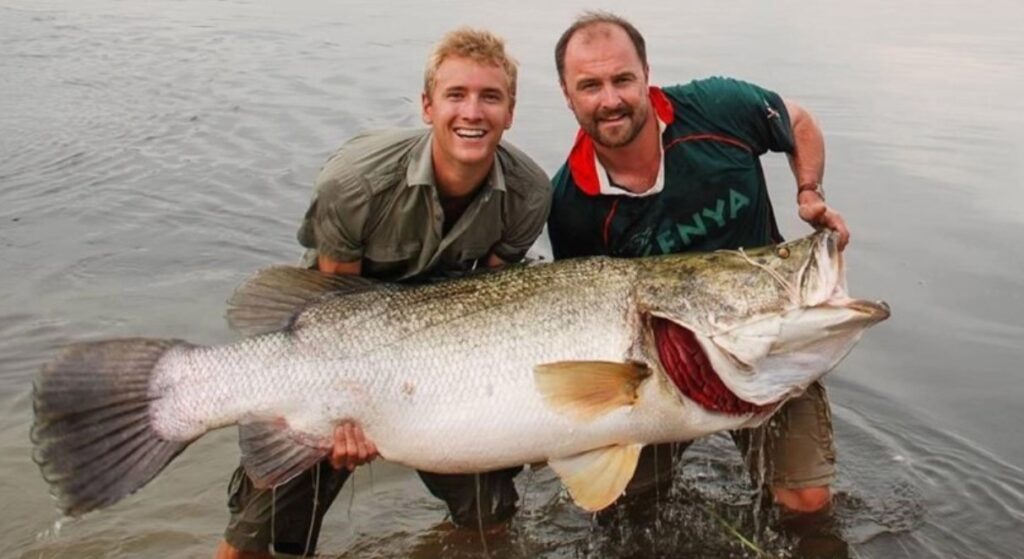
When planning a fishing safari, most enthusiasts focus on a specific “hit list” of species that define the Ugandan experience. The first, and most iconic, is the Nile Perch. Known for its massive, silver body and powerful, deep-water dives, the Perch is a master of the slow-moving currents and deep pools. Reeling in a “century” fish (over 100 pounds) is the ultimate goal for many. The fight is one of endurance; once hooked, a large Perch will head for the deepest part of the river or lake, using its immense weight to test the limits of your tackle.
The second target is the Tiger Fish (Hydrocynus vittatus). While much smaller than the Perch—usually ranging from 1kg to 8kg—the Tiger Fish is pound-for-pound one of the fiercest fighters in the world. Its mouth is a fortress of interlocking, razor-sharp teeth designed to shred prey. They are known for their lightning-fast strikes and acrobatic leaps out of the water once hooked. Targeting Tiger Fish requires precision and fast reflexes, often involving fly-fishing or light spinning tackle.
Finally, there is the Tilapia, which serves as the “bread and butter” of Ugandan waters. While Tilapia are often viewed as a food fish, they are a delight to catch on light tackle, especially for families or beginners. They are abundant in almost every water body in the country and provide a gateway to understanding the local fishing culture. Beyond these three, the Barbel, Catfish (Bagrus and Clarias), and the elusive Electric Catfish add a layer of unpredictability to every outing.
Why is Murchison Falls the most dramatic fishing spot on earth?
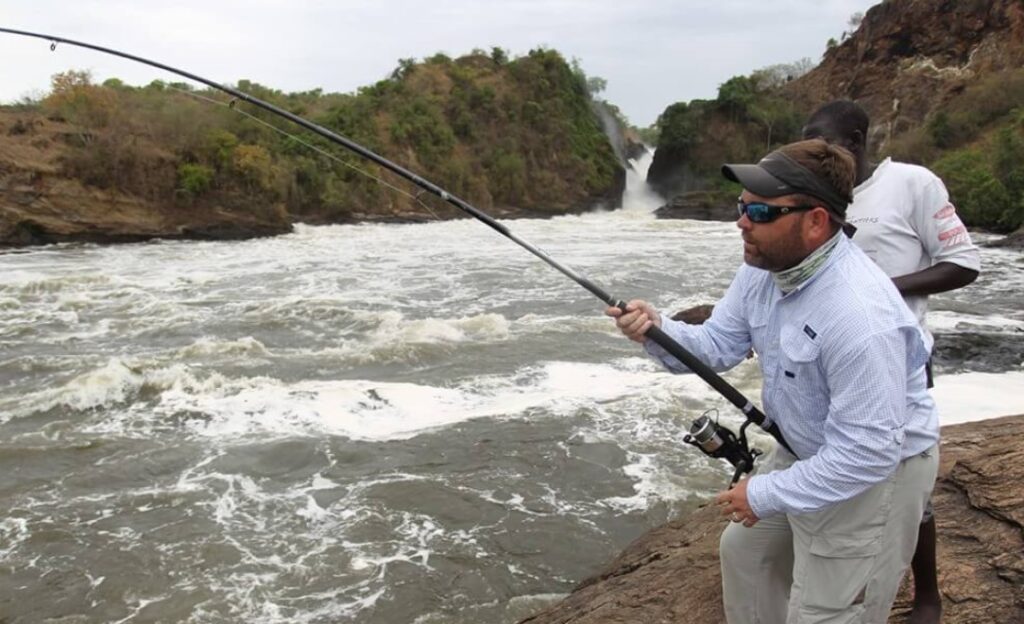
There is perhaps no place on the planet that combines high-stakes angling with raw, untamed wilderness quite like Murchison Falls National Park. Here, the Victoria Nile is squeezed through a 7-meter gap in the rocks, plunging 43 meters down into the “Devil’s Cauldron.” This geological feature acts as a massive aerator, saturating the water with oxygen and attracting vast schools of baitfish. Where there are baitfish, there are monsters.
Fishing at Murchison is a sensory overload. You are often standing on slippery, ancient rocks at the base of the falls, with the thunderous roar of the water vibrating in your chest. The pools below the falls are home to some of the largest Nile Perch in the world. It is a high-risk, high-reward environment; the rocks are treacherous, and the river is inhabited by large crocodiles and hippos. Because of this, fishing is strictly regulated and must be done in the presence of armed rangers. The thrill of hooking a 60kg Perch while an elephant herd drinks just fifty yards downstream is an experience that cannot be replicated anywhere else.
How does trolling on Lake Victoria compare to river fishing?
If Murchison Falls is the “extreme” end of the spectrum, Lake Victoria offers a more expansive, traditional big-game experience. As the second-largest freshwater lake in the world, Victoria feels more like an inland sea than a lake. Fishing here is primarily done via trolling from specialized speedboats. The technique involves dragging large lures—often Rapalas or locally made wooden lures behind the boat as it moves across the deep-water drop-offs around the Ssese Islands or Ngamba Island.
The challenge of Lake Victoria is its scale. Without the guidance of experienced local skippers and modern fish-finding technology, the lake can seem like an empty blue desert. However, once a school of Perch is located, the action is frantic. Trolling allows you to cover vast distances and target fish that are moving through the open water in search of tilapia schools. The environment is tropical and serene, with the sun reflecting off the water and the occasional sighting of a monitor lizard or a soaring fish eagle. It is the perfect setting for a multi-day expedition where you can stay on the islands and enjoy the “island life” between sessions on the water.
What are the logistical requirements for a fishing permit in 2026?
Uganda has taken significant steps to professionalize its spot fishing industry to ensure that the resource remains sustainable. If you are fishing within a National Park (like Murchison Falls or Lake Mburo), you are required to purchase a specialized permit from the Uganda Wildlife Authority (UWA). For 2026, the fees are structured to encourage longer stays: a one-day permit costs $50, while a four-day permit is $150. These permits are separate from the daily park entrance fees.
Outside of the national parks, such as on Lake Victoria or the Nile near Jinja, the regulations are less formal but still require adherence to local “catch and release” policies for trophy fish. Most reputable charter companies include the cost of these permits in their packages, but it is always wise to verify this before booking. Furthermore, anglers should be aware of the “biosecurity” protocols; you may be asked to disinfect your gear to prevent the spread of invasive species or waterborne diseases between different river systems.
When is the “Peak Season” for reeling in a trophy catch?
While Uganda’s tropical climate allows for year-round fishing, timing your visit can significantly improve your success rate. The dry seasons (December to February and June to August) are generally considered the best months. During these periods, the water levels are stable, and the clarity is at its highest. When the rains come (March to May and October to November), the runoff from the banks turns the river “chocolate” brown with silt, which can make it difficult for sight-predators like the Nile Perch to find your lures.
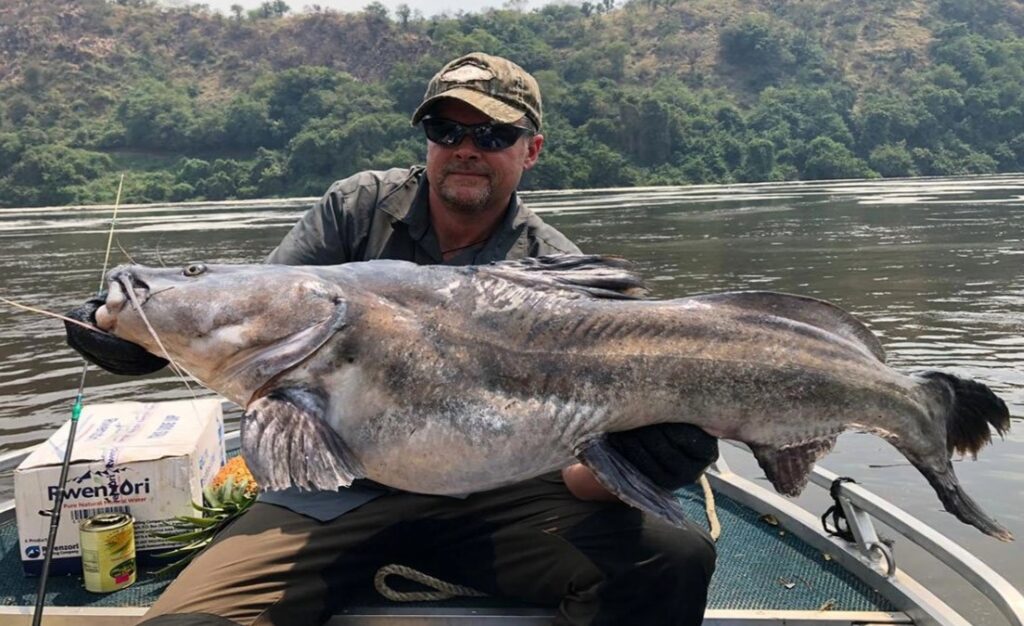
Temperature also plays a critical role. The heat of the African sun can drive fish into deeper, cooler water during the middle of the day. Therefore, the most productive hours are usually “the crack of dawn” (6:00 AM to 10:00 AM) and “the golden hour” before sunset. Night fishing is also an option in some areas, particularly for those targeting large Catfish, which become more active under the cover of darkness.
What specialized tackle and gear do you need for Ugandan monsters?
Bringing the wrong gear to a Nile Perch fight is a recipe for heartbreak. These fish are notorious for straightening hooks and snapping substandard lines. For those targeting large Perch, a heavy-duty boat rod (7 to 8 feet) with a high-quality multiplier or large spinning reel is essential. Your reel should be spooled with at least 50lb to 80lb test braided line. The initial “run” of a Nile Perch is legendary; it will strip hundreds of meters of line in seconds, so a smooth, powerful drag system is non-negotiable.
Lure selection is equally important. Large “Deep Diver” Rapalas in colors like “Firetiger,” “Redhead,” or “Silver” are the standard. For those fishing at the base of the Murchison Falls, live bait (usually a small Tilapia) is often the most effective method for tempting the truly massive residents of the deep pools. If you are targeting Tiger Fish, a lighter spinning rod with a wire leader is mandatory; their teeth will bite through even the strongest monofilament in an instant.
What are the best fishing lodges and camps in Uganda?
The rise of fishing tourism has led to the development of several lodges that cater specifically to anglers. In Murchison Falls, Baker’s Lodge and Paraa Safari Lodge offer high-end accommodation with direct access to the river. These lodges have their own fleets of well-maintained boats and expert guides who know the river’s moods. For a more “wild” experience, Murchison River Lodge offers excellent camping and tented options.
On Lake Victoria, the Ssese Islands offer a range of boutique resorts like Brovad Sands Lodge, which allow you to combine a fishing trip with a relaxing beach holiday. Near Entebbe, Ngamba Island Chimpanzee Sanctuary also offers overnight stays, allowing you to fish the surrounding waters in the morning and visit the chimps in the afternoon. In Jinja, the “Source of the Nile” area features several lodges like Wildwaters Lodge, which is situated on a private island in the middle of the rapids, offering some of the most scenic (and challenging) fishing spots in the country.
Can you combine fishing with a traditional “Big Five” safari?
One of the greatest advantages of Uganda is that its best fishing spots are located within or near its best wildlife parks. A “Grand Fishing Circuit” in 2026 typically starts in Entebbe, where you spend two days on Lake Victoria to find your “sea legs.” From there, you travel north to the Ziwa Rhino Sanctuary to see the white rhinos on foot, before continuing to Murchison Falls for three or four days of intensive river fishing combined with game drives to see lions, giraffes, and leopards.
This multi-sport approach ensures that even if the fish aren’t biting on a particular afternoon, the safari experience remains world-class. Many travelers also choose to end their trip by heading south to Bwindi Impenetrable Forest for Gorilla trekking. This contrast—from the hot, sun-drenched banks of the Nile to the cool, misty rainforests of the mountains—is what makes a Ugandan safari so uniquely rewarding.
What is the importance of “Catch and Release” in Ugandan waters?
As spot fishing grows in popularity, the importance of conservation has moved to the forefront. In the past, many trophy fish were kept for meat or photos, but today, most professional guides in Uganda strictly enforce a “Catch and Release” policy for large Nile Perch. These old, large fish are the primary breeders, and their survival is crucial for the health of the fishery.
Modern guides are trained in proper fish handling techniques: keeping the fish in the water as much as possible, using barbless hooks, and ensuring the fish is fully revived before being released back into the current. This ethical approach ensures that the “monsters of the Nile” will still be there for the next generation of anglers. When you release a 50kg fish and watch it swim back into the depths of the Nile, there is a profound sense of respect and connection to the wild that no trophy on a wall can ever match.
How do you prepare for the physical demands of an African fishing trip?
Fishing in Uganda is physically demanding. The heat can be intense, with temperatures often reaching 35°C (95°F) on the water. Dehydration is a real risk, so drinking large amounts of water and electrolyte-rich fluids is essential. Furthermore, the “fight” with a large Nile Perch can last anywhere from 20 to 45 minutes, requiring significant upper-body strength and endurance.
Sun protection is your most important “non-fishing” gear. Polarized sunglasses are vital for spotting fish and protecting your eyes from the glare of the tropical sun. Long-sleeved, breathable fishing shirts, wide-brimmed hats, and high-SPF sunblock are mandatory. Finally, ensure your vaccinations are up to date, and carry a basic first-aid kit that includes treatments for minor cuts (fish fins and hooks can be sharp) and insect repellent for the evening hours.
Why does the “Source of the Nile” in Jinja offer a different kind of thrill?
While Murchison and Victoria get most of the attention, Jinja—the adrenaline capital of East Africa—offers a unique river fishing experience. Here, the Nile begins its 6,000km journey to the Mediterranean. The water is fast-moving and broken by massive rapids. Fishing in these white-water sections is primarily focused on the Barbel and Yellow Fish, which thrive in the highly oxygenated “white water.”
It is a more active style of fishing, often involving casting into the eddies and pockets of calm water behind large boulders. Jinja is also a great place for “kayak fishing,” where you can navigate the smaller channels that larger boats cannot reach. After a day on the river, the vibrant town of Jinja offers a great social scene, with plenty of craft breweries and restaurants where you can swap “the one that got away” stories with other travelers.
What is the future of spot fishing in Uganda?
As we look toward the rest of 2026 and beyond, the future of Ugandan fishing looks bright. The government is investing in more patrol boats to combat illegal gill-netting in protected areas, and local communities are being integrated into the tourism value chain. By turning “poachers into protectors,” Uganda is ensuring that its waterways remain some of the most productive in the world.
Whether you are a fly-fishing purist or a heavy-tackle enthusiast, Uganda offers a raw, authentic, and deeply rewarding experience. It is a place where the lines between “spot” and “adventure” are blurred, and where every cast is a gamble with a prehistoric giant. The Nile is calling are you ready to answer?